About Picnic at Hanging Rock
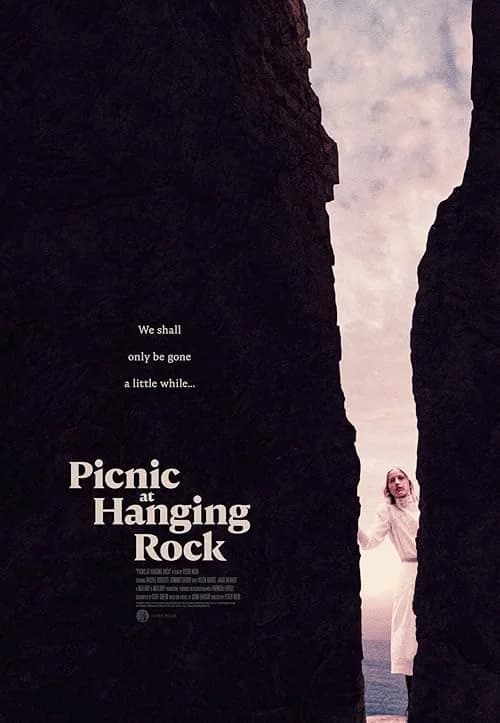
Peter Weir's 1975 masterpiece 'Picnic at Hanging Rock' remains one of cinema's most beguiling and atmospheric mysteries. Set on a stifling Valentine's Day in 1900, the film follows students and staff from Appleyard College, a strict Australian girls' school, as they embark on a picnic to the ancient volcanic formation of Hanging Rock. What begins as a genteel outing descends into an inexplicable nightmare when three students and a teacher vanish amidst the monolith's sun-drenched crevices, leaving no trace or rational explanation.
The film's power lies not in providing answers, but in masterfully sustaining an aura of eerie, dreamlike ambiguity. Weir's direction is hypnotic, using lingering shots of the rock's primordial landscape, a haunting pan-flute score by Gheorghe Zamfir, and deliberate, languid pacing to create a palpable sense of otherworldly dread. The performances, particularly from Helen Morse as the romantic Mademoiselle de Poitiers and Rachel Roberts as the stern, crumbling headmistress Mrs. Appleyard, are perfectly pitched between repression and hysteria.
More than a simple disappearance thriller, 'Picnic at Hanging Rock' is a profound meditation on the collision between rigid Victorian order and the untamed, unknowable force of the Australian wilderness. It explores the eruption of repressed sexuality and the fragility of civilized norms. Viewers should watch this cinematic landmark for its unparalleled atmosphere, its poetic and unsettling narrative, and its status as a cornerstone of the Australian New Wave. It's a film that lingers in the mind long after the credits roll, as mysterious and compelling as the rock itself.
The film's power lies not in providing answers, but in masterfully sustaining an aura of eerie, dreamlike ambiguity. Weir's direction is hypnotic, using lingering shots of the rock's primordial landscape, a haunting pan-flute score by Gheorghe Zamfir, and deliberate, languid pacing to create a palpable sense of otherworldly dread. The performances, particularly from Helen Morse as the romantic Mademoiselle de Poitiers and Rachel Roberts as the stern, crumbling headmistress Mrs. Appleyard, are perfectly pitched between repression and hysteria.
More than a simple disappearance thriller, 'Picnic at Hanging Rock' is a profound meditation on the collision between rigid Victorian order and the untamed, unknowable force of the Australian wilderness. It explores the eruption of repressed sexuality and the fragility of civilized norms. Viewers should watch this cinematic landmark for its unparalleled atmosphere, its poetic and unsettling narrative, and its status as a cornerstone of the Australian New Wave. It's a film that lingers in the mind long after the credits roll, as mysterious and compelling as the rock itself.