About The 400 Blows
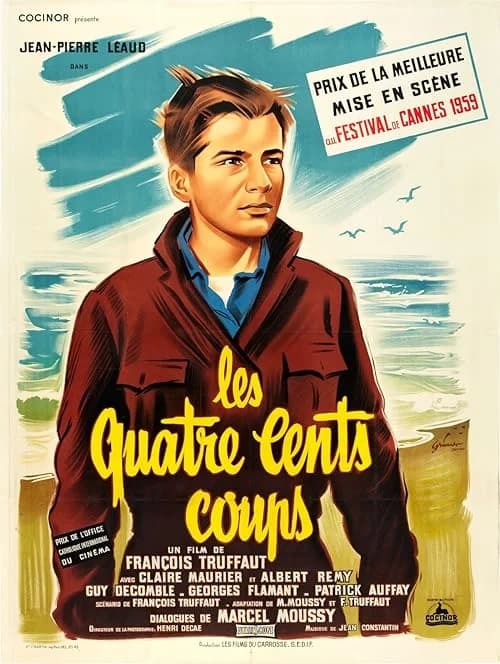
François Truffaut's groundbreaking 1959 film The 400 Blows (Les Quatre Cents Coups) stands as a cornerstone of French New Wave cinema and remains one of the most poignant coming-of-age stories ever captured on film. The semi-autobiographical narrative follows 12-year-old Antoine Doinel, brilliantly portrayed by Jean-Pierre Léaud in his debut role, as he navigates a world of parental neglect, indifferent teachers, and institutional failure in post-war Paris. As Antoine's small acts of rebellion escalate from skipping school to petty theft, Truffaut crafts a deeply empathetic portrait of adolescent alienation that feels remarkably contemporary.
The film's revolutionary approach to storytelling—with its location shooting, naturalistic performances, and fluid camera work—shattered conventional filmmaking norms and inspired generations of directors. Truffaut's direction balances heartbreaking realism with moments of lyrical beauty, particularly in the famous final freeze-frame that has become one of cinema's most iconic images. Léaud's performance is nothing short of miraculous, capturing the vulnerability, intelligence, and simmering anger of a child the world has failed.
Watching The 400 Blows today offers not just historical insight into cinematic evolution, but a timeless exploration of youth, freedom, and the search for identity. The film's emotional authenticity continues to resonate with viewers across generations, making it essential viewing for anyone interested in the power of cinema to capture the human experience. Its influence can be seen in countless subsequent films about adolescence, from Stand By Me to Moonlight, yet Truffaut's original retains its raw, revolutionary power.
The film's revolutionary approach to storytelling—with its location shooting, naturalistic performances, and fluid camera work—shattered conventional filmmaking norms and inspired generations of directors. Truffaut's direction balances heartbreaking realism with moments of lyrical beauty, particularly in the famous final freeze-frame that has become one of cinema's most iconic images. Léaud's performance is nothing short of miraculous, capturing the vulnerability, intelligence, and simmering anger of a child the world has failed.
Watching The 400 Blows today offers not just historical insight into cinematic evolution, but a timeless exploration of youth, freedom, and the search for identity. The film's emotional authenticity continues to resonate with viewers across generations, making it essential viewing for anyone interested in the power of cinema to capture the human experience. Its influence can be seen in countless subsequent films about adolescence, from Stand By Me to Moonlight, yet Truffaut's original retains its raw, revolutionary power.