About The French Dispatch
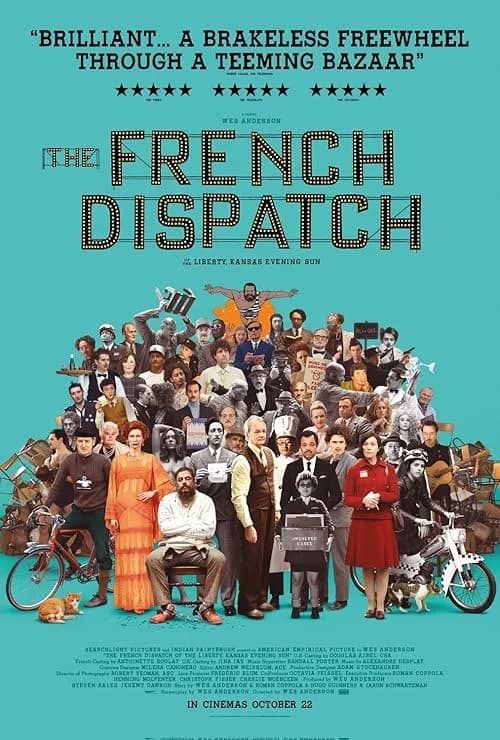
The French Dispatch (2021) represents Wes Anderson at his most stylistically ambitious, creating a cinematic love letter to journalism and storytelling. Structured as an anthology film, it presents three distinct stories from the final issue of a fictional American magazine published in the French city of Ennui-sur-Blasé. Each segment showcases Anderson's signature symmetrical compositions, meticulous production design, and dry wit, while exploring themes of artistic passion, political unrest, and culinary obsession.
The ensemble cast delivers performances perfectly attuned to Anderson's unique rhythm, with standout turns from Timothée Chalamet as a revolutionary student, Frances McDormand as a journalist navigating ethical boundaries, and Benicio del Toro as an imprisoned artist. The film's visual inventiveness is staggering, with Anderson employing different aspect ratios, animation sequences, and color palettes to distinguish each story while maintaining his cohesive aesthetic universe.
Viewers should watch The French Dispatch not just for its technical mastery, but for its heartfelt celebration of storytelling itself. The film captures the magic of how written words can transport readers to different worlds—a concept Anderson translates literally to the screen. While demanding attention to its dense dialogue and layered visual jokes, the film rewards viewers with one of contemporary cinema's most distinctive and lovingly crafted experiences. It's essential viewing for Anderson enthusiasts and anyone who appreciates cinema as a meticulously constructed art form.
The ensemble cast delivers performances perfectly attuned to Anderson's unique rhythm, with standout turns from Timothée Chalamet as a revolutionary student, Frances McDormand as a journalist navigating ethical boundaries, and Benicio del Toro as an imprisoned artist. The film's visual inventiveness is staggering, with Anderson employing different aspect ratios, animation sequences, and color palettes to distinguish each story while maintaining his cohesive aesthetic universe.
Viewers should watch The French Dispatch not just for its technical mastery, but for its heartfelt celebration of storytelling itself. The film captures the magic of how written words can transport readers to different worlds—a concept Anderson translates literally to the screen. While demanding attention to its dense dialogue and layered visual jokes, the film rewards viewers with one of contemporary cinema's most distinctive and lovingly crafted experiences. It's essential viewing for Anderson enthusiasts and anyone who appreciates cinema as a meticulously constructed art form.